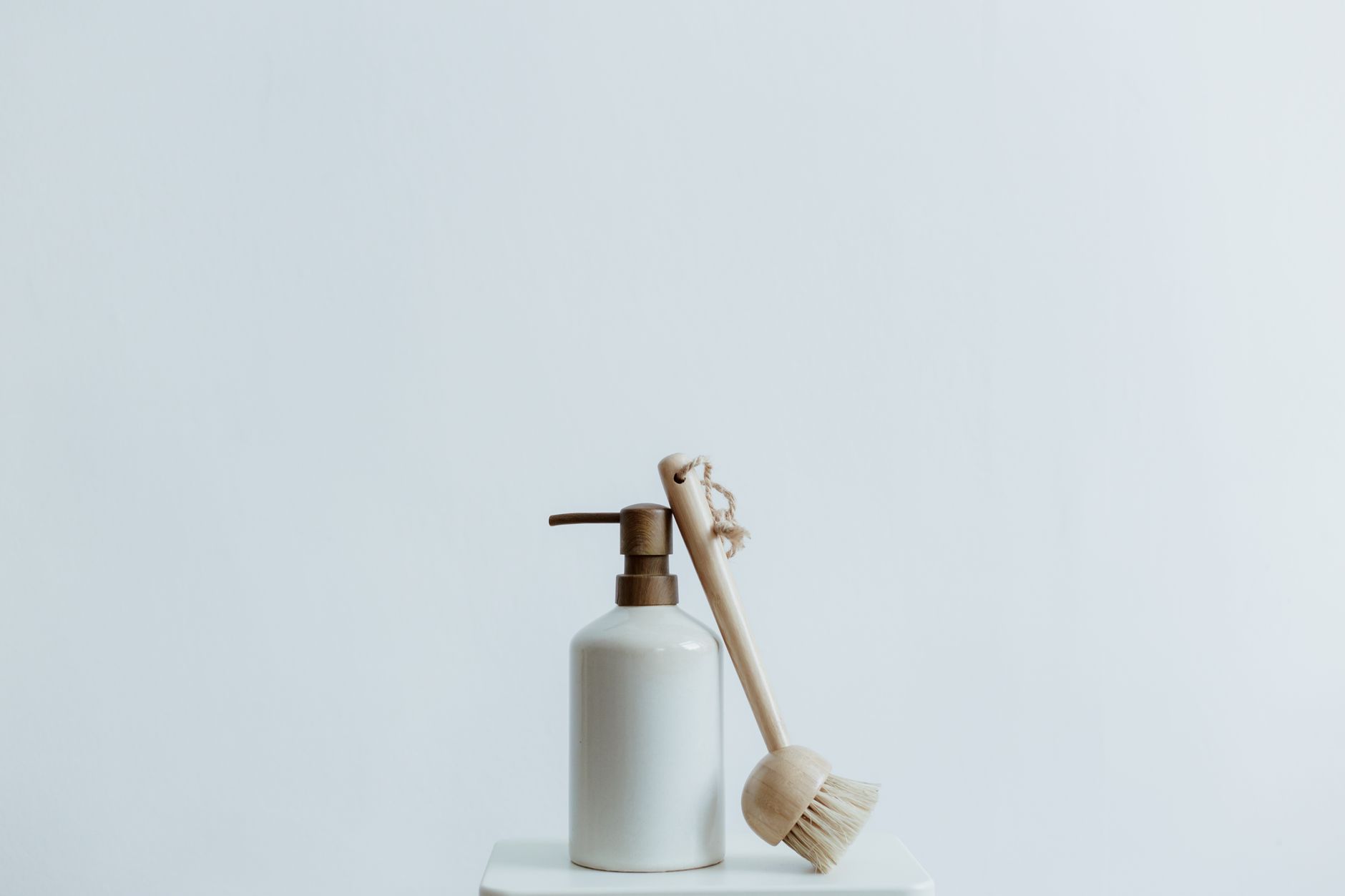
Most “sustainable” home products are marketing with a compostable wrapper. Three years of buying, testing, and returning this stuff taught me the pattern: the greener the label, the faster it falls apart. That’s not sustainability. That’s a subscription to your own trash can. A few products do earn their place, though — built so well you forget when you bought them. That’s the bar. Not “eco-friendly.” Durable. Repairable. Boring in the best way.
Here’s what I actually recommend, and what I’d tell you to walk past without slowing down.
Why It Matters
Every cheap replacement carries a hidden bill: raw materials, shipping, packaging, landfill. One product that lasts ten years replaces ten that last one. Simple math. Buying less but better cuts waste and usually saves money. Your home gets quieter and less cluttered too.

Top 5 Picks
1. Stainless Steel Dish Block and Scrubber Set
Swap liquid dish soap in plastic bottles for a solid block. One block lasts roughly as long as three bottles, and the steel scrubber outlives every sponge I’ve owned. Not glamorous. It just works.
- Pros: No plastic packaging, cuts grease fast, scrubber lasts years, cheap per use.
- Cons: Takes adjustment if you’re used to suds, block dissolves faster in standing water.
Verdict: Buy it. The scrubber alone justifies the switch.
2. Wool Dryer Balls
These replace dryer sheets permanently. They cut drying time by 10 to 25 percent depending on your load — which matters more than the softness claims. One set lasts a thousand loads or more.
- Pros: Cuts energy use, no chemical coating on clothes, near-indestructible.
- Cons: Doesn’t deliver the same static control, some people miss the scent.
Verdict: Solid buy, especially if you run the dryer often.
3. Cast Iron or Carbon Steel Pan
One pan, properly seasoned, does the work of five nonstick pans that scratch and get tossed. Carbon steel is lighter; cast iron holds heat longer. Either one can outlive you.
- Pros: No coatings to flake off, oven-safe, improves with age, repairable.
- Cons: Heavier than nonstick, requires seasoning and hand washing.
Verdict: Buy one. Learn to season it. Stop buying nonstick.
4. Glass Food Storage Containers with Bamboo Lids
Glass doesn’t stain, doesn’t hold odors, doesn’t leach. The bamboo lids are the weak point — they warp if you soak them. Treat the lids right and the set lasts a decade.
- Pros: Oven and freezer safe, no plastic migration, stacks cleanly.
- Cons: Heavier, lids need hand washing, glass can chip if dropped.
Verdict: Buy, but skip sets with plastic lids. They defeat the point.
5. Solid Bar Shampoo and Conditioner
One bar replaces two to three bottles. No plastic, no water weight in shipping. Quality varies wildly, so buy from a brand that lists full ingredients.
- Pros: Travel-friendly, lasts months, no bottle waste.
- Cons: Tricky for some hair types, residue if you don’t rinse well.
Verdict: Worth trying. Buy one bar before committing to a stockpile.

Buying Guide
Ignore the label. Look at the build.
Material first. Stainless steel, glass, cast iron, wool, and bamboo are the workhorses. They’re repairable, recyclable, or compostable at end of life. Plastic is the opposite of all three, even when it’s labeled recycled.
Repairability. Can you replace the handle? The lid? The seal? If the answer is no, the product is disposable by design. A company that sells spare parts is telling you something honest about its intentions.
Packaging. A glass container shipped in three layers of foam and plastic wrap isn’t a win. Check reviews that mention packaging before you buy.
Certifications that matter. FSC for wood and paper. GOTS for textiles. B Corp isn’t a product standard, but it’s a reasonable signal about the company. Greenwashing terms like “natural” and “eco” mean nothing legally.
Price per use. A thirty-dollar pan used daily for ten years costs less than a penny a day. A ten-dollar pan replaced twice a year costs more. Do that math, not the sticker math.
Weight and feel. Sustainable products tend to be heavier because they’re made of real material. If something feels suspiciously light, it probably won’t last.
Counter-intuitive take: buying used is often greener than buying new “sustainable” products. A secondhand cast iron pan from a thrift store has a smaller footprint than a brand-new one shipped across the country, certifications and all. The greenest product is the one that already exists.
What to Avoid
Bamboo everything. Bamboo grows fast, but a lot of it is glued together with formaldehyde-based resins. Bamboo cutting boards and utensils are usually fine. Bamboo “disposable” plates and cups are often coated and not compostable in a home bin.
“Compostable” plastic. Most of it only breaks down in industrial facilities your city probably doesn’t have. In a landfill, it behaves like regular plastic. Skip it.
Recycled plastic claims. Recycled content beats virgin plastic, but the product still ends up in a landfill. A marginal improvement, not a solution. Don’t pay a premium for it.
Multi-packs of anything you haven’t tested. Buying twelve bars of shampoo you’ve never used is how you end up throwing out eleven. Test one, then commit.
Products that need special cleaning supplies. If your sustainable product requires a proprietary cleaner, you’ve just added a second disposable product to the equation. That’s a trap.
Overhyped features. “Self-cleaning” surfaces, “antibacterial” coatings, “smart” anything. These add complexity, cost, and failure points. Simple products break less.
Anything marketed as a lifestyle. If the product’s main value is how it looks on a shelf, it’s decor. Decor is fine. Just don’t call it sustainability.
Overlooked Category
Water filtration. Most people buy bottled water or a plastic pitcher with disposable cartridges, then replace those cartridges every two months forever. A countertop filter with a stainless steel housing and a refillable or long-life cartridge costs more upfront and less over five years. It also cuts a mountain of plastic.
The overlooked part isn’t the filter itself. It’s the housing. Buy a filter with a metal body and a cartridge you can buy in bulk, and you’ve solved the problem most people don’t even notice they have. Check your local water report first — you might need less filtration than you think, which is its own kind of saving.
Second overlooked category: repair tools. A basic sewing kit, a set of screwdrivers, and a tube of glue fix half the things people throw away. This isn’t a product. It’s a habit. But it’s the highest-leverage purchase in this entire article.
Third: refill services. Local refill shops for soap, detergent, and cleaners are quietly expanding. You bring your own container and pay for the contents. No packaging, no shipping weight. Look for one near you before you buy another bottle online.
Verdict
Buy fewer things. Buy heavier things. Buy things you can fix. The five picks above aren’t perfect, but each one replaces a stream of disposables with a single durable object, and that’s the whole game. Start with the dish block and scrubber — it’s cheap, it works immediately, and it’ll convince you the rest is worth trying. Skip the rest of the noise. And ask yourself one question before your next purchase: will I still own this in five years? If the answer is no, put it down.