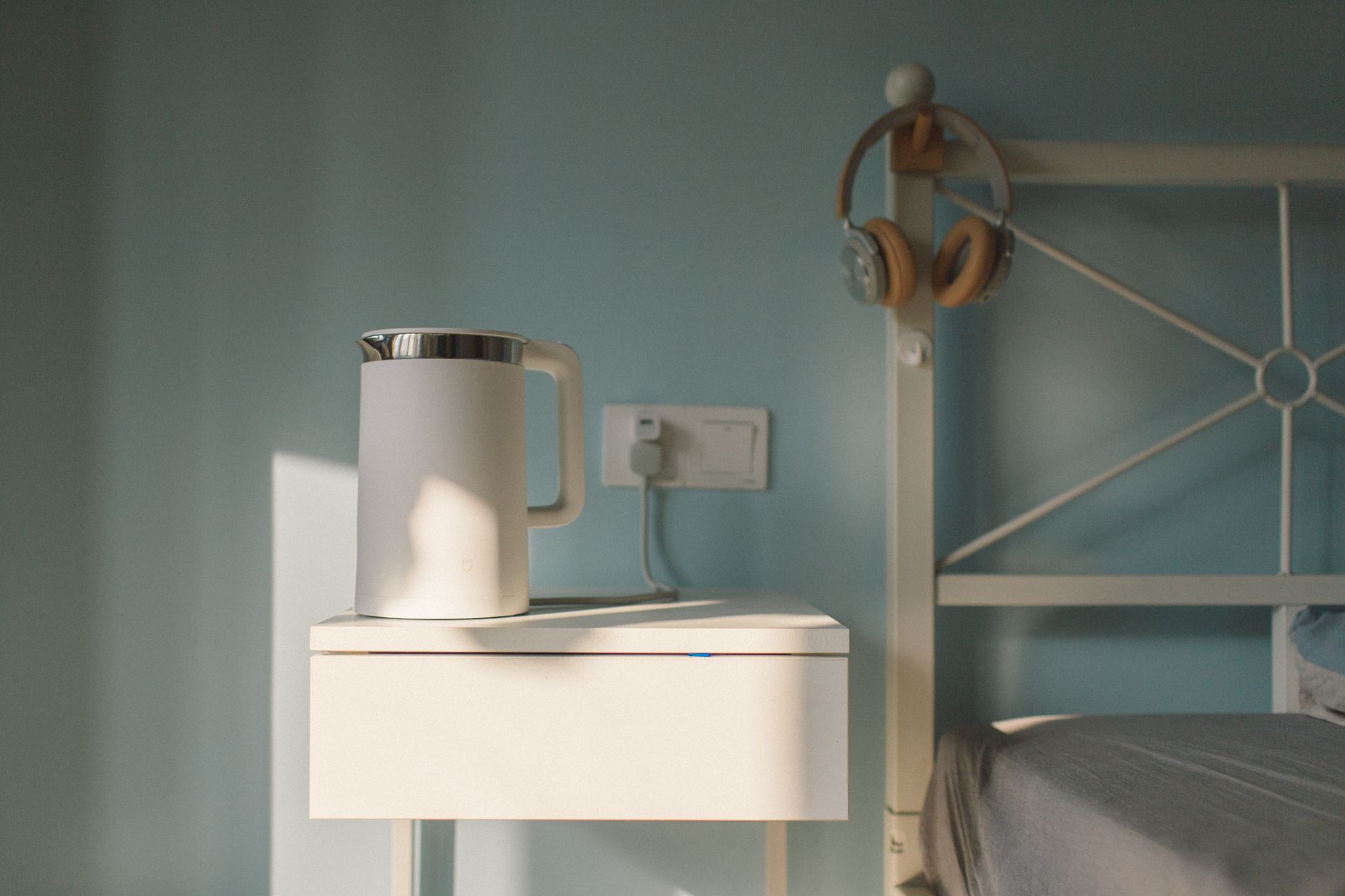
Hotel room coffee makers are biohazards. Airport coffee costs more than your checked bag. That sad paper cup of lukewarm water you paid four dollars for at the gate? You could have boiled your own before boarding. Travel more than a few times a year and a portable electric kettle stops being a gadget. It becomes infrastructure. It heats water in your room, at your campsite, in your car, or on a desk in a city where the tap water tastes like a swimming pool. The catch: most travel kettles are junk. They leak. They stink of plastic. They trip breakers. Or they collapse into a shape that never quite unfolds right again. I’ve tested enough of them to know which ones earn their space in a carry-on. These five do.
Boiling water on the road is a daily problem with no good default solution. Hotel kettles are rare in the US. Campsite stoves are heavy. Buying hot water gets expensive fast. A travel kettle fixes all of it in under two pounds.
Top 5 Picks
1. Bonavita 1.0L Travel Kettle

Verdict: The one I actually pack. Stainless interior, no plastic taste, and a real gooseneck spout that pours like a proper kettle instead of dribbling down the side. It’s not collapsible, so it eats space. But it’s the only one here that feels like a home appliance shrunk down rather than a toy scaled up.
Pros: 100% stainless steel water contact, precise pour, 1000W heats a liter in about five minutes, sturdy base.
Cons: Bulky for a backpack, heavier than dual-voltage rivals, no auto shutoff on some older units.
2. Travel Smart Dual Voltage Kettle
Verdict: The budget workhorse. It switches between 120V and 240V with a physical switch, which matters if you cross oceans. Build quality is plasticky and the pour is clumsy. But it boils two cups in four minutes and costs less than dinner at the airport.
Pros: True dual voltage, compact, cheap, widely available.
Cons: Plastic interior, faint chemical smell for the first few uses, flimsy lid.
3. Collapsible Silicone Kettle by Miroco
Verdict: The space-saver. It flattens to about two inches, which is the entire point. Food-grade silicone handles heat fine. But it retains smells if you don’t rinse it immediately, and the base is small enough to wobble on uneven surfaces.
Pros: Collapses flat, lightweight, dual voltage on some models, good for tiny bags.
Cons: Silicone picks up odors, slow to boil, less stable when full.
4. Bodum Bistro Electric Water Kettle
Verdict: The design pick. It looks good enough to leave on a counter, boils fast, and has a cordless serving base. But it’s a travel kettle in name only. It’s heavy, bulky, and the borosilicate glass body is a liability in a duffel bag.
Pros: Attractive, fast boil, easy to clean, cordless pour.
Cons: Fragile, heavy, not truly portable, glass gets dangerously hot.
5. Anpro Portable Travel Kettle
Verdict: The value pick for domestic travel. It’s small, cheap, and gets the job done in a hotel room. Don’t expect it to survive a checked bag or a decade of use. For occasional trips, it’s fine.
Pros: Inexpensive, compact, simple one-button operation, auto shutoff.
Cons: Plastic taste if not boiled out first, single voltage only, short cord.
Buying Guide
Voltage is the first thing to check, and the one most people ignore. A 120V kettle plugged into a 240V European outlet will fry instantly. Dual-voltage models handle both. Many “travel” kettles are single-voltage and useless abroad. If you only travel domestically, skip the complexity and buy a 120V model.
Wattage determines speed. Under 600W and you’re waiting ten minutes for a cup. Around 1000W is the sweet spot for travel. Fast enough to be useful, low enough to run on a hotel circuit without tripping anything. Anything above 1500W is overkill and risks blowing fuses in older buildings.
Interior material matters more than marketing suggests. Stainless steel is inert, durable, and tastes like nothing. Plastic interiors are lighter and cheaper but can leach a faint chemical flavor, especially in the first dozen uses. Silicone is fine for collapsible designs but absorbs odors over time. If you drink tea or pour-over coffee, steel is worth the weight penalty.
Capacity: 0.5L is one large mug. 0.8L is two cups. Anything over a liter stops being a travel kettle and starts being a regular kettle you happen to carry. Match capacity to how many people you’re boiling for, not to the biggest number on the box.
Safety features that actually matter:
- Auto shutoff when water boils dry — non-negotiable for hotel rooms.
- Boil-dry protection that resets, not one that permanently kills the unit.
- A locking lid, so it doesn’t pop open in your bag.
- Cool-touch handle, because a hot kettle with a hot handle is a burn waiting to happen.
- A base that stays put, not one that slides across a slick hotel desk.
Size and weight decide whether you actually pack it. A kettle you leave at home because it’s too heavy is a kettle you wasted money on. Under two pounds is the realistic threshold. Under 1.5 pounds is ideal.
What to Avoid
Skip anything with a “smart” app. A kettle does one thing. Connecting it to your phone adds a failure point, a battery, and a firmware update you’ll never install. The value is zero.
Beware of kettles that claim to be “collapsible” but only fold down halfway. They save less space than advertised and add a hinge that will eventually leak. If it doesn’t collapse to under three inches, it’s not saving you much.
Don’t buy a kettle with a non-removable power cord. Removable cords pack better, replace easier, and let you swap in a longer one when the hotel outlet is behind the bed. Fixed cords are a sign of cost-cutting.
Ignore capacity claims measured in “cups” without a volume. A “two-cup” kettle might mean two espresso cups or two soup bowls. Check the liter or ounce figure. Marketing math is not your friend.
The biggest trap: buying a kettle that’s technically portable but practically annoying. If it takes four minutes to assemble, leaks when tilted, or needs a specific outlet orientation, you’ll stop using it. Portability is about friction, not dimensions.
Overlooked Category
Immersion heaters get ignored because they look cheap and dangerous. They’re neither, if you buy a good one. A quality immersion coil plus a stainless travel mug boils water in about three minutes, weighs almost nothing, and costs a fraction of a kettle. You drop the coil in, plug it in, and unplug it when the water boils. No base, no lid, no footprint. The catch is you have to watch it — no auto shutoff — and you need a vessel that can take the heat. For ultralight travelers, backpackers, and anyone who wants hot water without dedicating bag space to a dedicated appliance, it’s the smarter answer. Most buyers never consider it. They should.
Here’s a counter-intuitive truth: the best travel kettle is often not a kettle at all. It’s the smallest thing that reliably boils water. If you can accept a little more attention and a little less convenience, the immersion heater wins on every metric that matters for travel — weight, size, and cost.
The Verdict
Buy the Bonavita if you want one kettle that does everything well and you have the space. Buy the Travel Smart if you cross borders and want dual voltage without spending much. Buy the collapsible Miroco if your bag is already full. Buy the Anpro if you travel domestically a few times a year and want to spend almost nothing. And if you’re counting ounces, look at a good immersion heater before you look at any kettle on this list. What’s your actual constraint — space, weight, or voltage? Answer that and the choice makes itself.