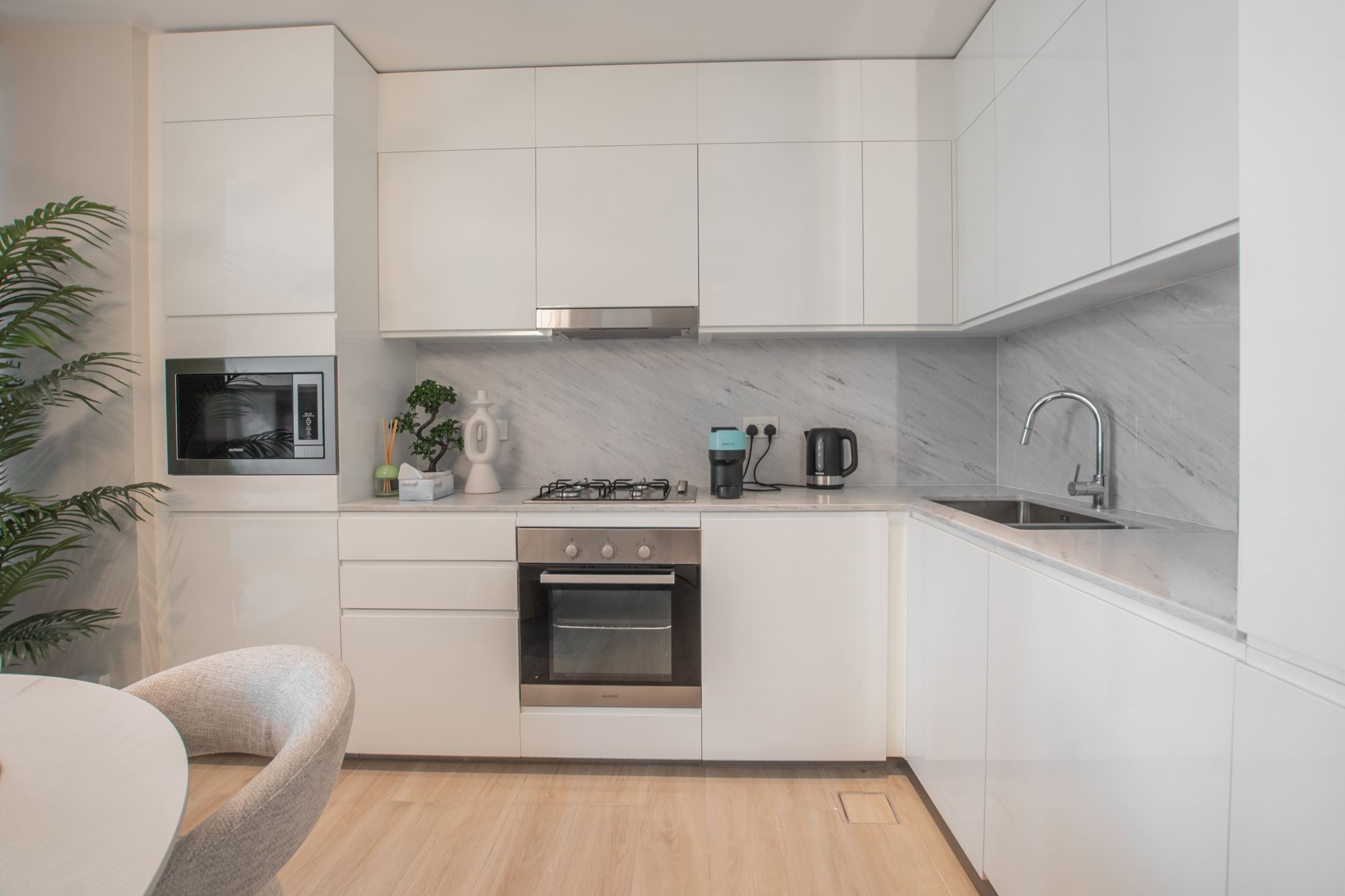
I own four kitchen-swaps-that-actually-work/”>kitchen tools. Not four categories — four objects, total. A chef’s knife, a cast iron skillet, a wooden spoon, a stainless steel saucepan. That’s what I cook with most nights, and it’s plenty. A minimalist kitchen isn’t deprivation. It’s refusing to let a drawer full of single-use gadgets do your thinking. Three years ago I started testing dozens of “essential” tools, kept the ones that earned their counter space, and sent the rest to Goodwill. Here’s the short list that survived. Best Blenders for Smoothies.
Most kitchens fail at simplicity because they confuse quantity with capability. A drawer with fifteen gadgets feels prepared. It isn’t. It’s slow, cluttered, and expensive to maintain. Pick a small number of tools that each do several jobs well. Then resist the urge to add a sixteenth.
Top 5 Picks
1. A full-tang chef’s knife (8-inch)
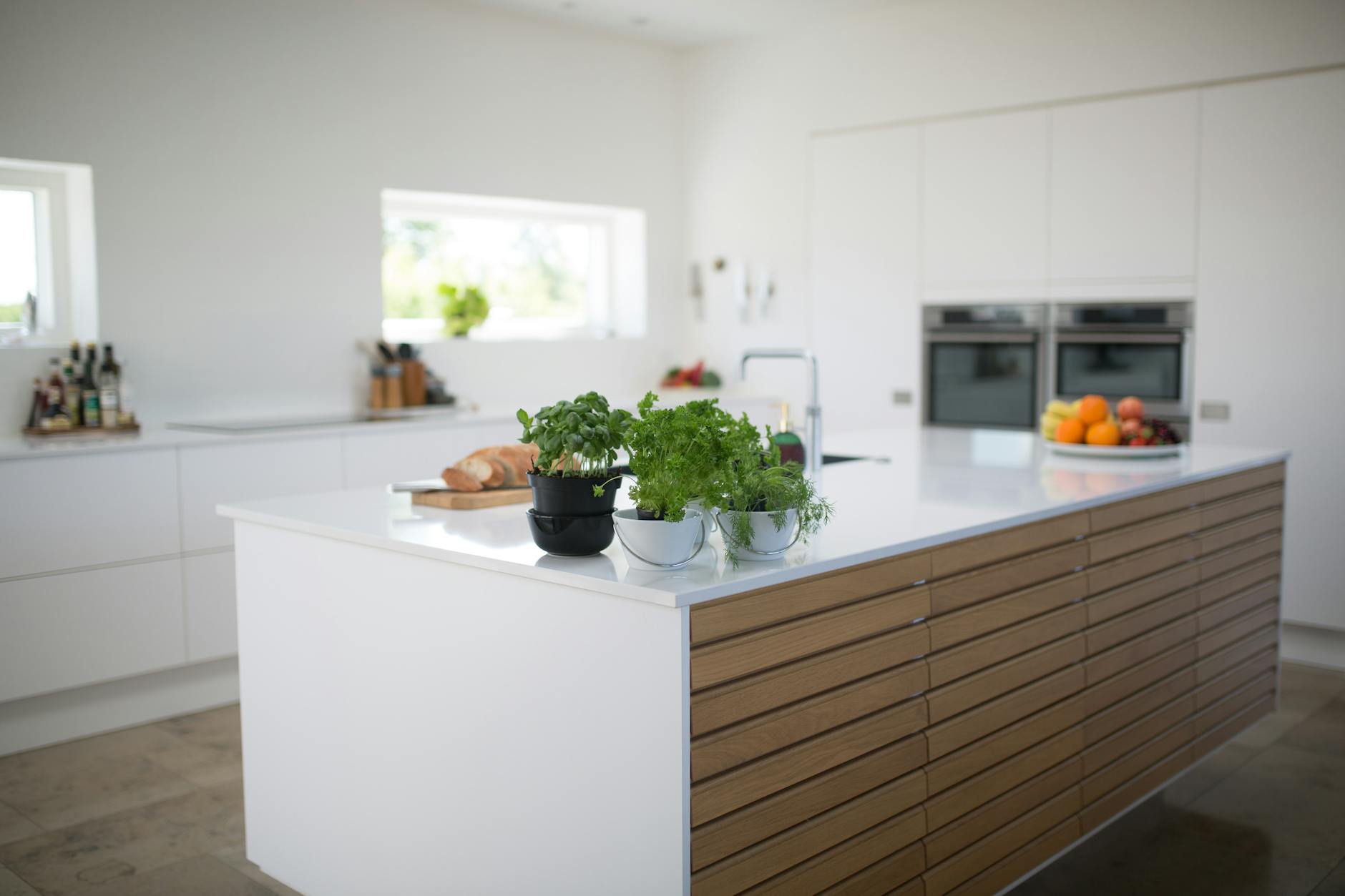
Verdict: The only knife you actually need. A good 8-inch chef’s knife replaces a paring knife, a santoku, a bread knife, and a carving knife for most home cooks. Buy one forged from high-carbon stainless steel, with a full tang running the length of the handle. Mine has broken down chickens and diced onions for a decade.
- Pros: One tool, endless jobs. Sharpens easily. Lasts decades.
- Cons: Needs a whetstone or honing rod. Cheap versions dull fast.
2. Enameled cast iron Dutch oven (5.5 quart)
Verdict: The workhorse that justifies its weight. Braises, bakes bread, boils pasta, fries. A 5.5-quart size feeds four with leftovers. The enamel coating means you skip the seasoning ritual that turns people off bare cast iron. It’s heavy — that’s the point. Thermal mass is why it works.
- Pros: Oven-to-table. Retains heat. Nearly indestructible if you don’t thermal-shock it.
- Cons: Heavy. Expensive upfront. Chips if you’re careless.
3. Stainless steel saucepan (3 quart)
Verdict: Boring, and that’s the highest compliment. You need one saucepan with a thick base and a tight lid. Sauces, grains, reheating, blanching. Skip nonstick here — it wears out and you don’t need it for liquid cooking. Look for a riveted handle and a rolled rim that pours cleanly.
- Pros: Cheap to buy well. Dishwasher-safe. No coating to flake.
- Cons: Not for eggs or delicate fish. Requires a little fat to prevent sticking.
4. Wooden spoon and silicone spatula (a pair)
Verdict: Two tools, one slot. A hardwood spoon won’t scratch anything and conducts no heat. A heat-resistant silicone spatula handles scraping, folding, and eggs. Together they cover every stirring and flipping task a home kitchen throws at you. Total cost: under twenty dollars.
- Pros: Dirt cheap. Gentle on cookware. Nearly unbreakable.
- Cons: Wood needs occasional oiling. Silicone stains with turmeric.
5. Digital instant-read thermometer
Verdict: The tool that made me a better cook than any gadget I’ve bought since. Guessing doneness is the number one reason home cooking disappoints. A five-second read on chicken, steak, bread, and custard removes the guesswork. Buy one that reads in under three seconds and is waterproof.
- Pros: Ends overcooking. Small. Cheap insurance.
- Cons: Needs a battery. Cheap models drift out of calibration.
Buying Guide
What separates a tool that earns its place from one that gathers dust? Four things matter more than brand, price, or how it looks on a shelf.
Material. Stainless steel, carbon steel, cast iron, and hardwood survive decades. Plastic and coated aluminum don’t. If a tool’s core material is plastic, ask whether it does a job nothing else can. Usually it doesn’t.
Versatility. Count the jobs a tool does before you buy it. A tool that does one thing needs to do that one thing extraordinarily well to justify its space. A tool that does five things earns a spot even if it’s mediocre at two of them.
Repairability and maintenance. Knives sharpen. Cast iron reseasons. Wooden spoons get oiled. Tools you can maintain last. Tools that are sealed, glued, or electronic with no service path are disposable by design — treat them that way.
Weight and hand feel. This is the spec nobody lists and everybody feels. A knife that’s too heavy tires your wrist. A pan that’s too light scorches. Hold the tool before you commit. If you can’t hold it, buy from a seller with a real return policy.
One more thing: match the tool to your actual cooking. Bake bread weekly and a Dutch oven pays for itself in months. Eat out five nights a week and it doesn’t. Buy for the kitchen you run, not the one you imagine.
What to Avoid
Here’s the counter-intuitive part: the biggest trap in minimalist kitchens isn’t buying too much. It’s buying “minimalist” versions of things that were never the problem. A sleek, expensive garlic press is still a garlic press. Minimalism is about function, not aesthetics.
Single-use gadgets. Avocado slicers, egg separators, strawberry hullers, banana slicers. Each solves a problem your knife already solves. They cost more, clean worse, and take up space you don’t have.
Nonstick everything. Nonstick has one legitimate use: eggs and delicate fish. Buying a full nonstick set means replacing it every two years as the coating degrades. That’s the opposite of minimalist — it’s a subscription.
Overhyped “smart” features. Bluetooth-enabled pans, app-connected thermometers, scales that sync to your phone. These add failure points, batteries, and software updates to tasks that worked fine with analog tools for a century. Ask whether the feature solves a real problem or just a marketing brief.
Sets. Knife sets, cookware sets, utensil sets. You’re paying for the tools you won’t use to get a discount on the ones you will. Buy individual pieces. Yes, it costs more per item. It costs far less overall.
Anything you can’t clean easily. If a tool has crevices, seams, or moving parts that trap food, it’s a bacteria farm with a handle. Simplicity and hygiene point the same direction.
Overlooked Category
The tool most buyers miss isn’t a tool at all — it’s storage. A magnetic knife strip, a single wall-mounted rail, or one good crock. Why does it matter? Even a minimalist kitchen fails if the four tools you own are buried under a pile of junk. Storage forces a hard limit. A knife strip holds six knives. A rail holds what it holds. When the strip is full, you buy nothing new until something leaves.
This is the quiet genius of constraint. Most people try to build a minimalist kitchen through willpower — resisting purchases one at a time. That fails. Physical limits don’t. If your tools have a fixed, visible home, clutter can’t accumulate because there’s nowhere for it to go. I mounted a single eighteen-inch rail above my prep space three years ago. It holds my knife, my spoon, my spatula, and my thermometer. The saucepan and Dutch oven live in one cabinet. That’s the whole system.
Buy the storage first. It sounds backwards. It isn’t. It sets the ceiling before the spending starts.
The Verdict
Start with the chef’s knife and the thermometer. Those two change how you cook more than anything else on this list, and together they cost less than a mid-range blender. Add the Dutch oven when you’re ready to cook in the oven more than the microwave. The saucepan and the spoon-and-spatula pair round out a kitchen that handles ninety percent of weeknight meals without a single gadget drawer.
Five tools. One rail. No subscriptions, no batteries in the pan, nothing to replace every two years. If you’re standing in a kitchen right now wondering where to begin, walk to your gadget drawer and pull out the three things you haven’t touched in six months. That’s your starting point — not the store.